Since the massive influx of 2017, nearly one million Rohingya refugees in Cox’s Bazar have remained entirely dependent on humanitarian aid. Prohibited from formal employment, food assistance is their only lifeline.
In April 2026, World Food Programme (WFP) replaced the uniform food voucher system for Rohingya refugees in Bangladesh with a needs-based assistance model, under which extremely food-insecure households receive US$12 per person per month, highly food-insecure households receive US$10, and food-insecure households receive US$7 in Cox’s Bazar (with slightly higher amounts in Bhasan Char).
“We can no longer make ends meet. The financial assistance is simply not enough.”
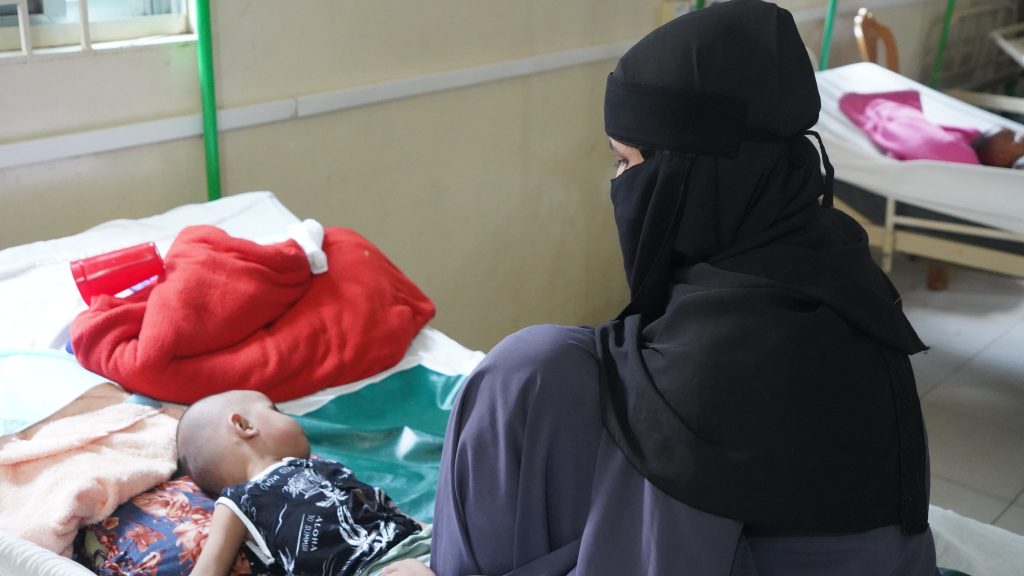
My name is Rohima (pseudo name). It has been almost nine years since we first came to Bangladesh, fleeing the violence, shootings, and fighting in Myanmar back in 2017. When we crossed the border at night near Tumbru, I was seven months pregnant and became very ill. We walked the entire way while weapons were being used against our people. Immediately after crossing, I had to be taken to Cox’s Bazar for medical treatment, and it took me a month to recover.
When we first arrived, the government provided $12 per person. Back then, we had fewer children, so we could manage. Over the years, our family has grown to six members: my husband, our four children, and myself. My eldest daughter is 9, my son is 6, my younger daughter is 4, and my youngest son is 14 months old. Now that our family is large, the amount of aid has decreased to $10, and we can no longer make ends meet.
When it was $12, each person would get 13kg of rice, 1kg of sugar, a packet of salt, and two bars of soap. For the whole family, they would also give 1kg of chili, a bottle of oil, a packet of flour, and onions. Even if it didn’t last the whole month, it would at least cover 20 to 22 days.
With the $10 allowance, the rations we receive, they only last for 15 days. To manage, I have to make impossible choices. Since the reduction, I have stopped taking my full share of rice just so I can bring home other essentials like eggs, chicken, oil, and flour for my small, sick children.** I didn’t even bring turmeric or chilies this time. In fact, I recently had to sell 2kg of turmeric from our rations just to buy medicine for my family.
My husband is very sick and cannot do any heavy labor. He was injured playing football back in Burma, and he suffers from constant, unyielding body aches, chest pain, muscle pain, and swollen legs. On top of that, our children frequently get sick. I am currently at the MSF clinic because my young son had a fever so intense that he couldn’t move. The doctors admitted him and explained it stems from a tonsil issue. Thankfully, all my children were delivered in this hospital, and we do receive decent medical care here, but I still need about 200 to 300 Taka every day for my husband and children’s extra needs.
Because we lack money, I cannot take my husband to the doctor frequently. To survive the 15 days of the month that the rations don’t cover, he sits at a shop and earns a small income working for someone else. We also buy a few extra items to resell.
As if the hunger and illness weren’t enough, we are facing a terrifying new threat. Unknown people have been calling and threatening my husband, saying, “You must join “the group.” You cannot stay here like this.” I don’t know exactly what kind of group it is, but it seems like one of those groups that kills people. They are telling him he must return to Burma to perform a task. My husband is very afraid, but he tells them, “I am sick. What can I do?” He refuses to go, telling me, “I will not leave my family and children behind.” Because of these threats, we had to leave our shelter and rent a place at the far end of the market, closer to the shop where he works. To make things harder, recent stormy weather damaged our shelter; the government promised bamboo for repairs, but we haven’t received it yet.
We were living quite happily and peacefully in our own home in Burma until we were driven out. My father was a teacher there, but he passed away before we left. My father-in-law passed away after we arrived in Bangladesh, and now both my mother-in-law and my husband are sick.
I am grateful to the Bangladesh government for giving us shelter, but this current food assistance—where some receive $7 and others receive $10—is causing severe hardship. I first learned about the cuts through a mobile notification. Both my mother and my mother-in-law are now receiving only $7 each, and they are suffering greatly. Thinking about the peace we’ve lost, our constant sickness, and the impossible burden of surviving without an income leaves me completely overwhelmed with despair.
**For a developing child, a simple mix of rice and lentils (khichuri) combined with eggs isn’t just a traditional meal—it provides the complete essential proteins and micronutrients required for brain development and immune system recovery. When rations are cut to $7, these vital protein sources are often the first to disappear from a family’s table.
“If we can all eat together, we will; if not, we won’t. You don’t need to go. Come home.”
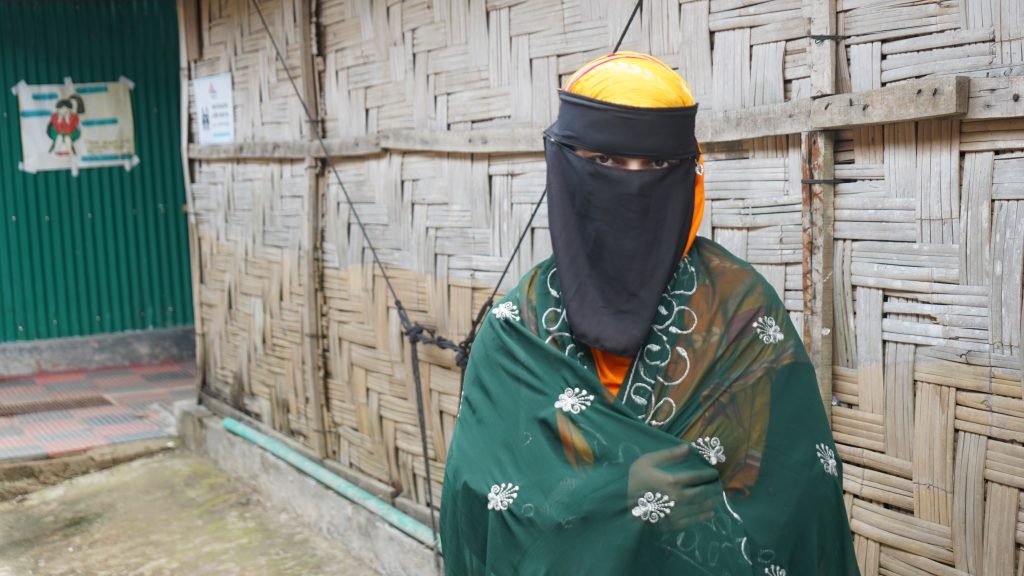
I am Sadeka. For almost nine years now, Bangladesh has been our home. My family is large- there are nine of us living in one house: my husband, my brother-in-law, our six children, and myself. Together, we have four sons and two daughters. My sons are 18, 15, 13, and 7 years old, and my daughters are still very young, just 3 and 1 year old. Counting my husband, there are six males and three females under our roof.
Managing a household of this size has become a source of deep, constant unrest for me because our rations have been severely reduced. Currently, we receive just 7 dollars per person each month. Before April, we used to get 12 dollars. This has changed everything for us.
When we received 12 dollars, the money was enough to bring home a variety of food—chili, oil, turmeric, sugar, lentils, and salt. Whatever was available, we could bring. We used to get two sacks of rice weighing 16 kg, but because we had more money, we wouldn’t take the full amount of rice; instead, we balanced it out to take other items like eggs and lentils. Back then, we could roughly make it through the month, and we could afford to buy fish and vegetables to eat. We also used to get flour to make breakfast and chickpeas to eat. None of that happens anymore.
Since the ration dropped to 7 dollars, the money simply isn’t sufficient. If I want to get the full variety of rations, the money runs out immediately. This time, after taking the rice, I could only bring 1 kg of chili, 2 bottles of oil, 2 kg of onions, 2 kg of sugar, and half a kg of garlic. I couldn’t bring any lentils, eggs, or even salt. It is a great sadness. How do you cook without salt? We need 2 kg of chili and 3 to 4 kg of onions for a month, so what I brought is not enough. I brought less rice than before too, because after buying those few items, nothing else could be brought.
Now, we eat rice three times a day. A typical day’s food consists of dried fish with rice in the morning, some greens at lunch, and just one curry with rice at night. We have to eat with just a single item. We cannot buy fresh fish or vegetables like we used to.
To make matters worse, the authorities reduced our ration amount specifically because we have 18-year-olds in the family. They consider them “able-bodied.” But we have no right to work. My grown boys cannot do any work inside the camp, nor are they allowed to go outside to find a job. If they are considered able-bodied but are barred from working, what are they supposed to do when our rations are cut? If we could work, maybe we could earn money to buy the things we lack, like salt. My husband has no steady income either; he only occasionally gets daily labor work with other organizations, maybe once a month, or for 10 days every two or three months. When he does get work, he uses that money to buy a little fish or the ingredients we missed at the ration distribution.
This environment of hunger and confinement is taking a toll on my children. All four of my sons have studied, but they see no future here. They ask me, “What will we do staying in the camp? We can’t do any work here. What’s the point of staying?” They want to go elsewhere to find a job.
In April, we got to know that a boat full of people trying to go to Malaysia sank. Despite the danger, my second son tried to do the exact same thing about ten days ago, at the end of April. He left the camp and went to Shamlapur, a beach area in Teknaf. He didn’t even have transport fare, and I have no money to give him. He had gone through a long walk and from Shamlapur, he called us from someone else’s phone to tell us he wanted to leave for Malaysia and that he needed money.
We forced him to come back tohome. We told him, “No, you cannot go. We don’t have any money. People are dying while trying to go. If we can all eat together, we will; if not, we won’t. You don’t need to go. Come home.” So, he didn’t end up going.
It feels terrible just thinking about our situation. Right now, I am at the hospital because my 1-year-old daughter has breathing difficulties and a cough. I brought her here on Thursday night. The doctor says she is a bit better now, but not fully recovered. She is so small, and it is impossible to manage nutritious food for her every day. I used to mix rice and lentils to make a gruel for her, but how am I supposed to buy eggs or lentils for her now?**It is not like it used to be.
Living like this since coming from our own country causes me so much pain. Not getting enough rations is one constant unrest. Then, watching my children try to leave because they see no way to survive here is another unrest. They don’t know anything else, they can’t do anything, and we are living with great hardship.
**For a developing child, a simple mix of rice and lentils (khichuri) combined with eggs isn’t just a traditional meal—it provides the complete essential proteins and micronutrients required for brain development and immune system recovery. When rations are cut to $7, these vital protein sources are often the first to disappear from a family’s table.
“If I am unable to arrange a proper meal, my elderly mother breaks down in tears”
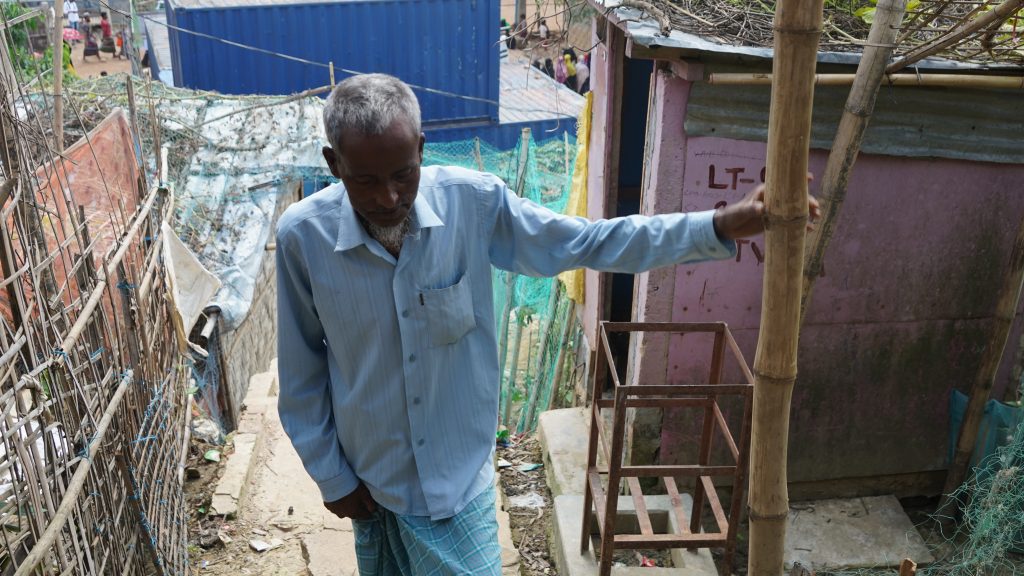
My name is Norul Amin. When I first arrived in Bangladesh from Myanmar, I came with my entire family, including my mother, my wife, and my children—12 of us in total. Today, I have six children living with me in the house: three daughters and three sons. The eldest among them is 25 years old, and the others were born at two- to three-year intervals, down to my youngest, who is 10. I have three other children who are married and live separately, including one daughter who married back in Myanmar and fled alongside us during the displacement.
Currently, my family is receiving $12 per person as a food ration. While others around me receive less, we are still getting the $12 amount. We were informed about the changes to the ration system in March, a few days before the April distribution. But even with $12, life has become a struggle for us and everyone around us. The current ration does not provide enough vegetables, fruits, or variety.
Before, when everyone received equal ration support, we were able to help and support one another during difficult times. Now, with the reduced and unequal assistance across the camps—where some families get $7 and others get $12—that community support has vanished, making it very difficult to manage even our basic needs. If we could all receive the same ration support as before, we would at least be able to arrange our meals properly and live with some peace and dignity.
We had some savings when we first arrived, but that money is long gone. When we first came, the rations were sufficient to get by, my sons would find small jobs nearby, and we managed somehow. Now, our three meals consist of just rice with dried fish or wild greens that we gather from the surroundings. For instance, the system provides us with lentils, but our community doesn’t usually eat much of it; we prefer fish. But fish costs money. For a family of nine, we need at least half a kilogram of fish per meal. Even if I buy small fish, it costs 150 to 200 BDT daily. Where would I get that kind of money?
I am no longer in a physical condition to work. Since arriving in Bangladesh, my family has known no peace because three people in my house are constantly ill. I am sick due to old age and have been on medication for eight and a half years. Back in Myanmar, I was a victim of violence, which left me with chronic pain in my neck and legs. My wife has diabetes; she is constantly on medication, mostly stays indoors, and has developed hearing difficulties since last Ramadan. Seeing my mother, my wife, and myself in this physical condition is deeply painful.
These circumstances make it extremely challenging to earn a living. Walking in the sun hurts my legs, and walking in the rain is dangerous; during the monsoon, the mud and slippery roads make walking nearly impossible. I once developed a severe infection from the mud that resulted in the amputation of a toe. I do occasionally work as a daily laborer for an NGO, but that is only for four or five days—at most ten days—every three or four months. I use that meager income just to buy fish or essential medicines.
I am also too afraid to let my sons go out to look for work. I live in constant fear that they might be kidnapped, and I would never be able to afford a large ransom. Because I have no money, I don’t even have the means to arrange a marriage for my 25-year-old son.
I feel restless and troubled whether I am inside the house or outside. At home, if I am unable to arrange a proper meal or a good curry, my sick, elderly mother breaks down in tears because of the lack of proper food. Watching her cry leaves me feeling deeply distressed. We simply cannot afford to buy the food we need [even without being subject to the current cuts], and it is incredibly difficult to manage.
If your stomach is at peace, the world is at peace, right? But if you can’t eat, everything feels chaotic
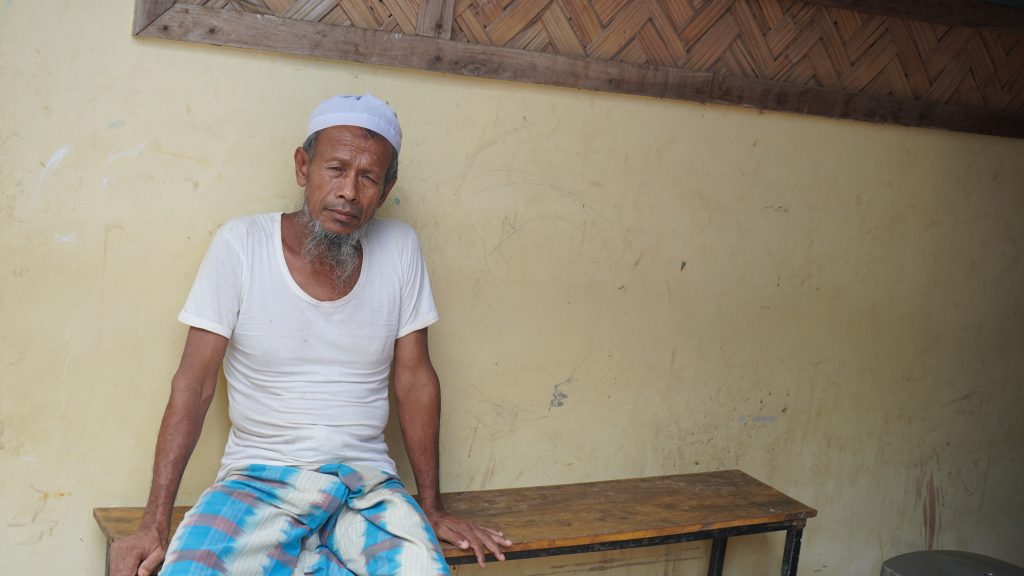
My name is Abdul Jalil. I am 60 years old. We came here from Myanmar after enduring immense suffering. In Myanmar, we had everything—22 kani (about 8.8 acres) of land, an earthen house, and livestock, including 68 cows and goats and 28 buffaloes. I used to hire laborers to plow my fields. Then, one night, the attacks suddenly began. On a morning in 2017, during the time of Fajr prayer, we were forced to flee our homes. After traversing many difficult paths, we finally reached Bangladesh. It is a blessing that Bangladesh gave us shelter and food aid, which allowed us to survive.
However, I am currently receiving only $7 per person as food assistance. This reduction has put us in a very difficult position. There are six members in my family—my wife, my two sons, and my two daughters. My sons are 20 and 18 years old, and my daughters are 17 and 15. I have a grown-up son, but he doesn’t have any work or income, leaving us struggling without any earning source. On top of that, my eldest son suffers from mental health issues; he has a severe temper, is constantly distressed, and spends the entire day outside the house, which is a major concern for us. My 17-year-old daughter has lost her ability to speak. In Myanmar, she spoke perfectly well, but after moving here, she was under a tree one evening, and since that incident—which we believe was trauma or a “bad omen”—she hasn’t uttered a single word.
[According to Rohingya cultural beliefs, women should not approach large trees at night with their hair down, as this could attract negative energies]
Despite my physical limitations, I walked to the relevant authorities’ office using a cane to explain our situation. I informed them that since I have two family members with disabilities, we should be eligible for additional financial assistance. However, they couldn’t help me directly. They only took down our information and stated that this falls under the UN’s jurisdiction, and that they can only increase the aid once an order is issued from there.
Before this decision, we used to receive $14 to $15 per person at different times. Back when we received $14, we got a 28 kg sack of rice, 6 kg of lentils, 6 kg of sugar, 4 packets of salt, and 2 kg each of chili and turmeric powder. We also got 4 kg of onions and could buy vegetables, and we were even able to afford fish and chicken occasionally. We had enough groceries to survive.
Since the aid was reduced to $7, we get almost nothing. In April, with this $7 per person, I could only get three bottles of oil, 3 kg of onions, and one 28 kg sack of rice for my family of six. Once those were purchased, there was no money left in our allocated budget for any other items. We didn’t even get salt, turmeric, chili, or anything else needed for cooking; we will have to buy them. Three bottles of oil are simply not enough for us.
If you look into our cooking pots right now, you will see that we are eating rice with only Amer Kazi (fermented mango water), burnt chilies, and some boiled leafy greens gathered from nearby. Where would we find the money to buy fish? I cannot even afford to buy 250 grams of fish, and I can no longer afford garlic for cooking. Previously, we used to get everything—onions, garlic, ginger, and sugar. Now, we can’t even drink tea. We just drink hot water without sugar, pretending it’s tea.
Now, I wake up in the morning and just have a cup of hot water, and then it’s almost like fasting for the rest of the day. During the mango season, we gather raw mangoes to make Amer Kazi, burn a few chilies, and pick some wild greens to cook. This is how we are getting by. If your stomach is at peace, the world is at peace, right? But if you can’t eat, everything feels chaotic. Now, peace just means being able to eat and survive.
To make matters worse, during the recent storms and rain, my shelter was damaged, and water leaks inside. I last received a tarpaulin four years ago, and since then, I haven’t received any materials to repair my home. I bought some bamboo fencing with my own money to fix the inside, but I couldn’t afford to fix the outer fence or the tarpaulin. They are all ruined, and I am in deep trouble.
In this situation, I feel utterly miserable and restless. If I could go back to Burma right now, I would. If the environment there becomes safe, we will definitely return. There, we wouldn’t have to buy fish. We could eat vegetables grown on our own land. I know I won’t get my livestock back, but perhaps I would at least get my land back. I can’t sleep at night when I think of Myanmar; I miss my homeland so much.
Like many websites, MSF uses cookies to enhance your user experience. By continuing to navigate this site you are giving consent to the issue of these cookies. No, give me more info
This website uses cookies to improve your experience while you navigate through the website. Out of these cookies, the cookies that are categorized as necessary are stored on your browser as they are essential for the working of basic functionalities of the website. We also use third-party cookies that help us analyze and understand how you use this website. These cookies will be stored in your browser only with your consent. You also have the option to opt-out of these cookies. But opting out of some of these cookies may have an effect on your browsing experience.
Necessary cookies are absolutely essential for the website to function properly. This category only includes cookies that ensures basic functionalities and security features of the website. These cookies do not store any personal information.
Any cookies that may not be particularly necessary for the website to function and is used specifically to collect user personal data via analytics, ads, other embedded contents are termed as non-necessary cookies. It is mandatory to procure user consent prior to running these cookies on your website.