Yes! As a health actor, we are both responding to the health impacts generated by climate change and the degradation of the environment, and contributing to those impacts when carrying out our medical activities.
From the energy we use to run health facilities, to transporting medical supplies and staff, to buying medicine and hospital equipment, to extracting water and generating waste – all of this has an impact on the environment. These activities generate carbon emissions which cause global heating, air and water pollution, and impact the availability of water in areas where it is already scarce.
These environmental impacts in turn have consequences on people’s health: there are more frequent and intense extreme weather events like floods and cyclones, changing patterns of diseases like malaria and dengue, and increased malnutrition due to the difficultiesof producing food in a more hostile climate.
As health professionals we have an ethical obligation to ‘do no harm’ to people and the planet. We have therefore committed to taking action to reduce our environmental footprint.
What does it take to green an organisation like MSF?
Given the size and nature of our organisation, it will take time and effort to change the way we deliver healthcare across the world. This is a long journey, but we remain committed to becoming more environmentally sustainable.
First, we started by measuring our carbon footprint to understand where we needed to put most of our efforts and we identified a roadmap with concrete actions targeting the key emitting areas. Teams have now started implementing these solutions and activities across our projects in different locations.
Greening our organisation presents many challenges, as most of our medical activities take place in remote and conflict-affected locations, where electricity and safe waste disposal are not always available. Responding to crises around the world remains our priority, and our organisation is growing as we seek to provide care to those in need. We will gradually change the way we work to reduce our environmental footprint. This will not only be good for the environment but will also strengthen the resilience of our activities and improve the continuity and quality of our medical programmes.
Over the past three years, MSF teams have been implementing a wide variety of solutions and initiatives to reduce emissions and pollutive practices. These actions are starting to show positive impact:
Strengthening health facilities through solar and energy efficiency
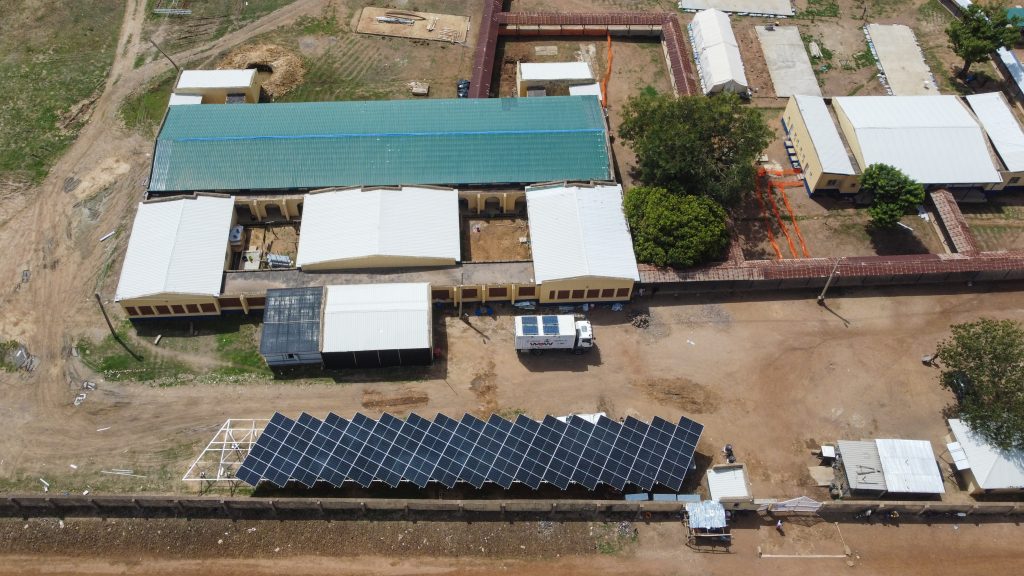
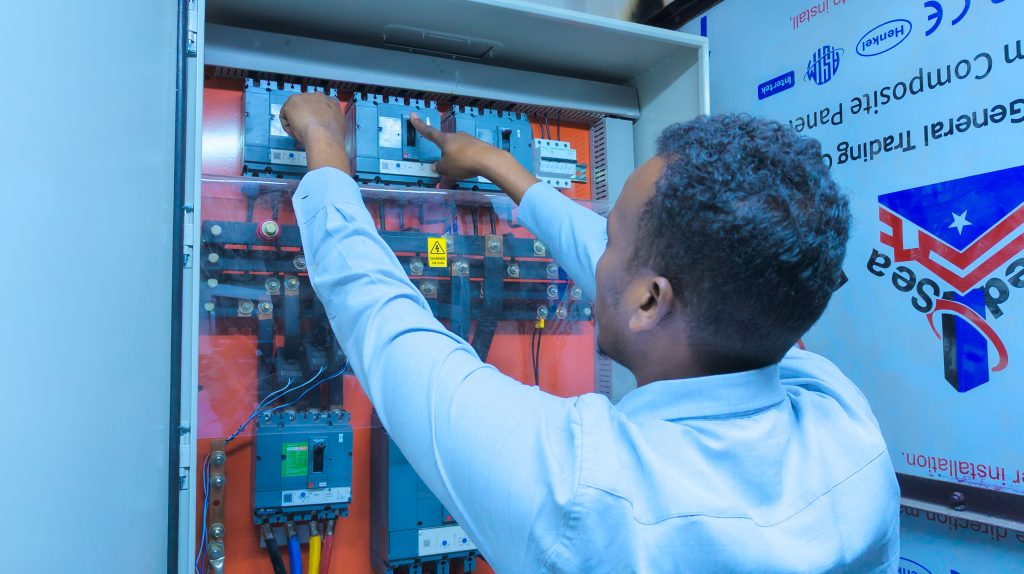
As of January 2026, we have installed more than 92 solar power systems across our projects, saving approximatively 500 000 liters of fuel each year. This allows for more autonomous and sustainable health facilities as we don’t have to rely on unstable electricity – meaning it is also better for patient care. Many projects have also installed solar appliance systems, including 26 solar water pumps, 71 solar water heaters and 53 solar air conditioners.
We are also insulating our pharmacies and warehouses to reduce the amount of energy needed to run them, and we are replacing the air conditioners in our health facilities with new types that consume up to 65% less energy.
Towards more responsible healthcare waste management
Today we rely on a variety of equipment to run our medical activities around the world. All of this creates waste. Much of this either includes or is made of plastics: examples include tents and single-use medical items, such as gloves, masks, vaccination kits and packaging for medicines. In many places where we work, it is difficult to recycle or dispose of such material properly.
We therefore aim to create less waste in the first place. We will reduce consumption when possible and aim to use reusable, more sustainably produced and/or minimally packaged medical items.
We are also working to ensure that the waste we generate is being disposed of more responsibly. This means putting in place good waste management practices, even in emergency settings. At the end of 2025, nearly half of our projects had established waste management plans.
Smartermedical choices for patients and the environment
Health care systems worldwide rely heavily on single use items and so do we. 66% of the medical items we use in our projects are single use. We therefore aim to reduce the amount of such items and find alternative products when possible. This includes face masks and examination gloves when not necessary.
Many of these items are also made of plastics, which is harmful to patients and the environment. We are evaluating the 4000 plus single use items in our catalogue to identify what we can change now and determine whether we can ask manufacturers to change what they produce.
We are also looking into other solutions that are better for both environment and patients, such as providing oral treatment (pills) instead of infusion of medicine, which is more comfortable for patients and avoids using single use medical items. We also aim to tackle the over-prescription of medications so that patients only receive the medicines they need, which will help to reduce emissions and generate less waste. This also helps to counter antimicrobial resistance.
In the contexts where we work, we are aiming to drive less and better by using less-polluting vehicles where possible, reducing the number of journeys, and training drivers to drive in a more energy-efficient way. By the end of 2025, more than half of our projects had trained their drivers. We are also servicing vehicles in a way that reduces the consumption of oil and fuel.
We are also working to reduce unnecessary air shipment of equipment and medicines by managing stocks and placing orders better, aiming to have the bulk of material shipped by boat instead of air.
Like many websites, MSF uses cookies to enhance your user experience. By continuing to navigate this site you are giving consent to the issue of these cookies. No, give me more info
This website uses cookies to improve your experience while you navigate through the website. Out of these cookies, the cookies that are categorized as necessary are stored on your browser as they are essential for the working of basic functionalities of the website. We also use third-party cookies that help us analyze and understand how you use this website. These cookies will be stored in your browser only with your consent. You also have the option to opt-out of these cookies. But opting out of some of these cookies may have an effect on your browsing experience.
Necessary cookies are absolutely essential for the website to function properly. This category only includes cookies that ensures basic functionalities and security features of the website. These cookies do not store any personal information.
Any cookies that may not be particularly necessary for the website to function and is used specifically to collect user personal data via analytics, ads, other embedded contents are termed as non-necessary cookies. It is mandatory to procure user consent prior to running these cookies on your website.