No one chooses to walk until their feet blister; the caravan becomes the only way out when options to work or live with dignity run out.
By: Derly Sánchez Arias, MSF Coordinator in Tapachula.
Migrant caravans are organized groups that travel together—often on foot—to attempt to protect themselves from violence in the absence of safe migration routes. As a group they are more visible, which reduces some, but not all, risks. Publicly, they are often labelled a “logistical challenge” or just seen as a mass flow of migrants. However, Médecins Sans Frontières (MSF) teams working in Tapachula — a city in southern Mexico’s Chiapas state and the origin of many migrant caravans — see people who have reached breaking point: the result of untenable living conditions that have forced people to seek a way out.
On the night of April 20, 2026, after hours of rain, nearly 1,000 people left Tapachula on foot and began walking the coastal highway. They carried only the essentials: water, some food, and their few belongings. They were not marching as a political strategy or to provoke authorities. They were walking because staying was no longer an option. After more than 25 days on the road, they still aim to reach Mexico City or another city that might offer them the possibility of work and a dignified life.
One of the roots of this movement lies in Haiti, where the humanitarian crisis, armed violence, institutional collapse, and the deterioration of the health care system have made daily life unviable. This is not only about political instability: it is a humanitarian crisis in which entire families flee not only poverty, but also violence that uses people—especially women and girls—as a territory of war. Above all, they seek protection and a small chance at a sustainable future.
Upon arriving in Mexico, that expectation meets a new barrier: Tapachula. The city functions as a blockade. It is a gateway but, at the same time, a point of containment where time seems to stand still. Without timely access to documents such as the Clave Única de Registro de Población (CURP) — an official identification number essential for working, accessing services in Mexico, or legal status- thousands of people remain trapped in informal shelters, with no real opportunity to rebuild their lives.
The voices of Haitian migrants
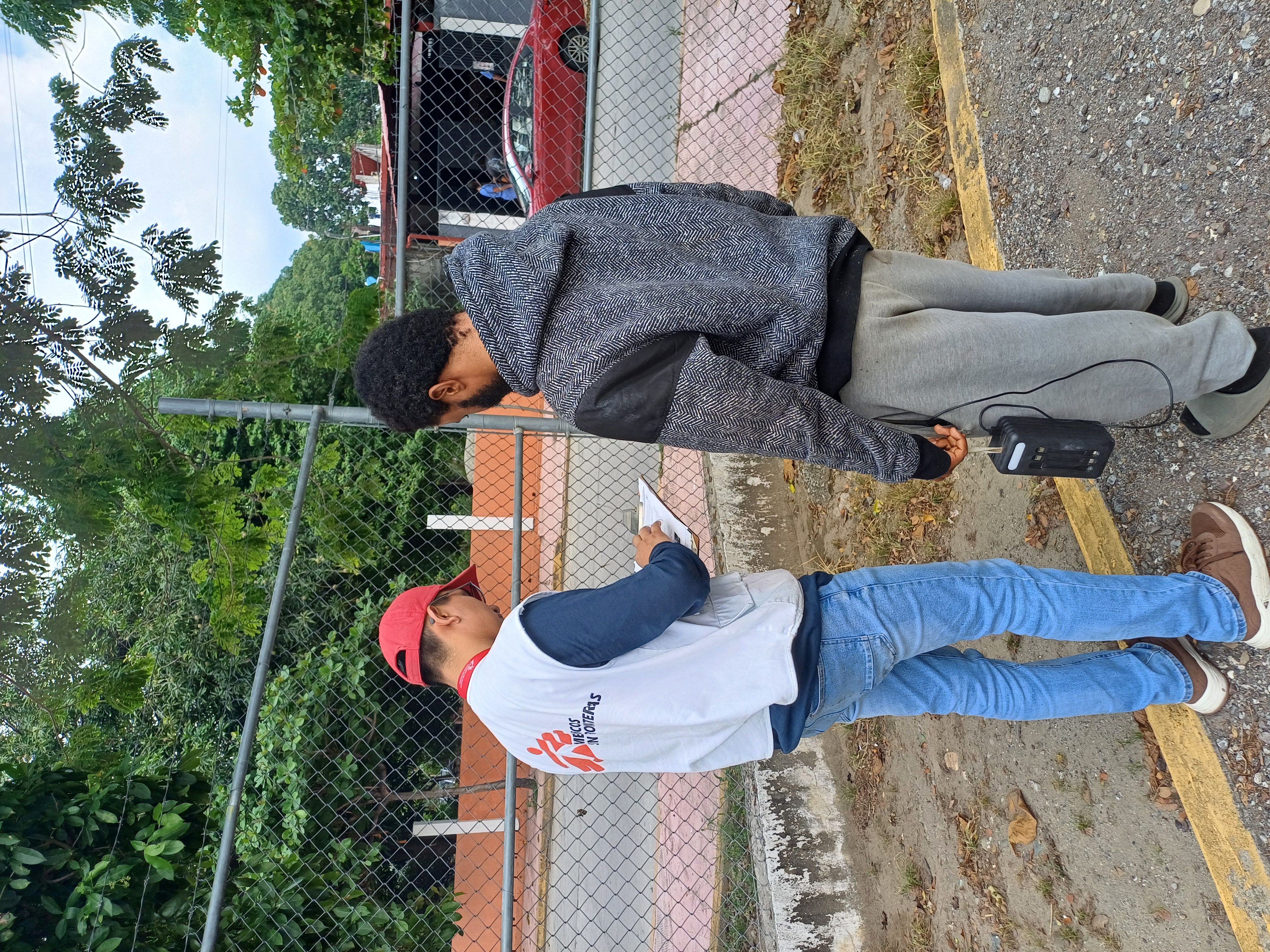
This is the only hope I have left. If I look back, there is no future for me. In Tapachula, not having a job or papers is normal. I don’t want to go back to that. What keeps me going is helping my grandmother — who stayed in Haiti — taking care of her. For me, she is everything; she is my motivation.
Djosymar Joseph
23 y/o who is traveling with the caravan
Djosymar is from Haiti. He had begun university studies but had to abandon them in search of a safe future.
“I spent several days without eating to pay for housing,” said Lemeus*, who was also a 23-year-old university student when he fled Haiti. “You leave your country because things are not good, but you arrive here and face the same situation.”
Their testimonies show how their suffering continues across borders. Without stable income, access to housing or food is not guaranteed. Language barriers and adapting to a different cultural environment also makes things challenging.
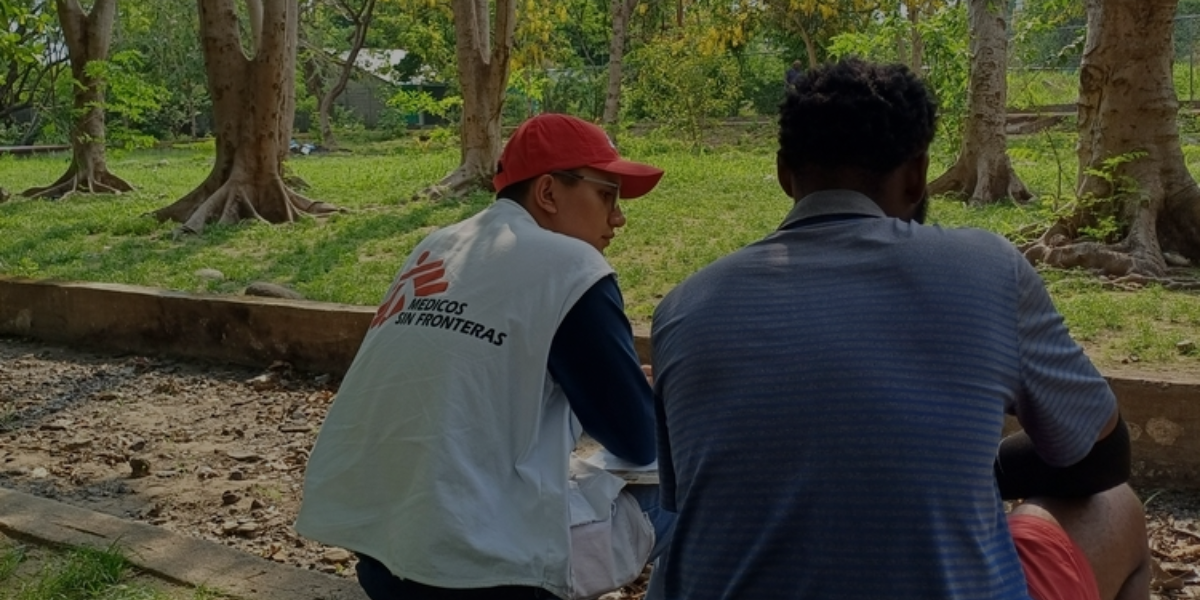
In 2025 and so far in 2026, MSF mobile clinics have assisted more than 1,400 people from seven caravans. Ninety-five percent of patients were older than 15, and 66 percent were women.
In Tapachula, between 20,000 and 50,000 people remain waiting, according to estimates from local NGOs. In consultations, MSF teams have heard recurring stories: women, men, and children who have fled violence and encounter new forms of vulnerability and violence in Mexico. The impacts are not only physical; mental health consequences are also present. Many people have chronic illnesses that have gone months without treatment. People are living in overcrowded conditions, often without reliable access to food or safe drinking water, while many children remain out of school and struggle to survive on the streets.
Walking under scorching sun with open blisters is not a choice or a strategy. It is a response to stagnation. As they move forward, the caravan exposes the limits of a response that has failed to resolve the situation.
Continuing to interpret caravans as a threat is to miss the essential point: they are the result of contexts that push people out and of journeys marked by waiting, uncertainty, and the lack of viable alternatives. They are like an open wound unable to heal. They are the result of violence that forces people to flee, and then follows them at every stage of the journey: during transit, at borders, in asylum rejections, and in the general indifference to their plight. To see them as a threat is to deny the dignity of those who, even during pain, keep walking with the hope of finding a place to start again and live without fear.
–––
Djosymar Vialski Joseph, joven haitiano de 23 años, huyó con sus dos hijos de la violencia de su país natal. Se unió a la caravana para buscar una mejor vida en otro lugar de México. ©Ángel Rodríguez/MSF