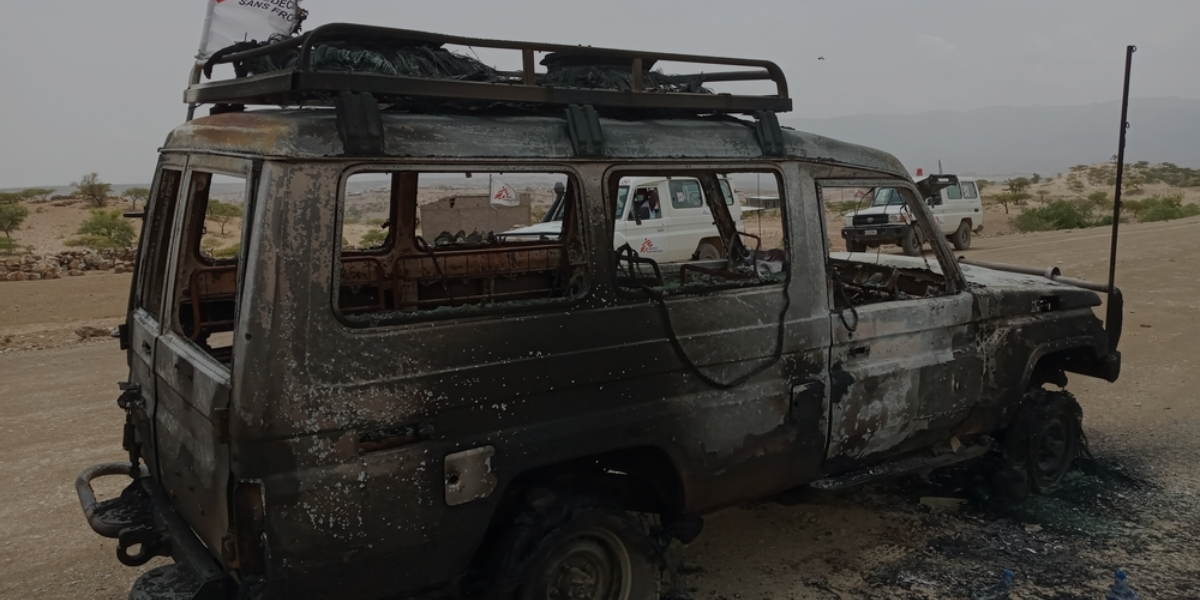
Madrid/Nairobi– Five years after three Médecins Sans Frontières (MSF) staff members were brutally killed in central Tigray, Ethiopia, the Government of Ethiopia has shown no sign of concluding and sharing the outcomes of a credible and impartial investigation, despite our continuous engagement efforts. On 24 June 2021, María Hernández Matas, Tedros Gebremariam Gebremichael, and Yohannes Halefom Reda were shot while they were in the area looking for people in need of medical assistance, after reports of heavy fighting.
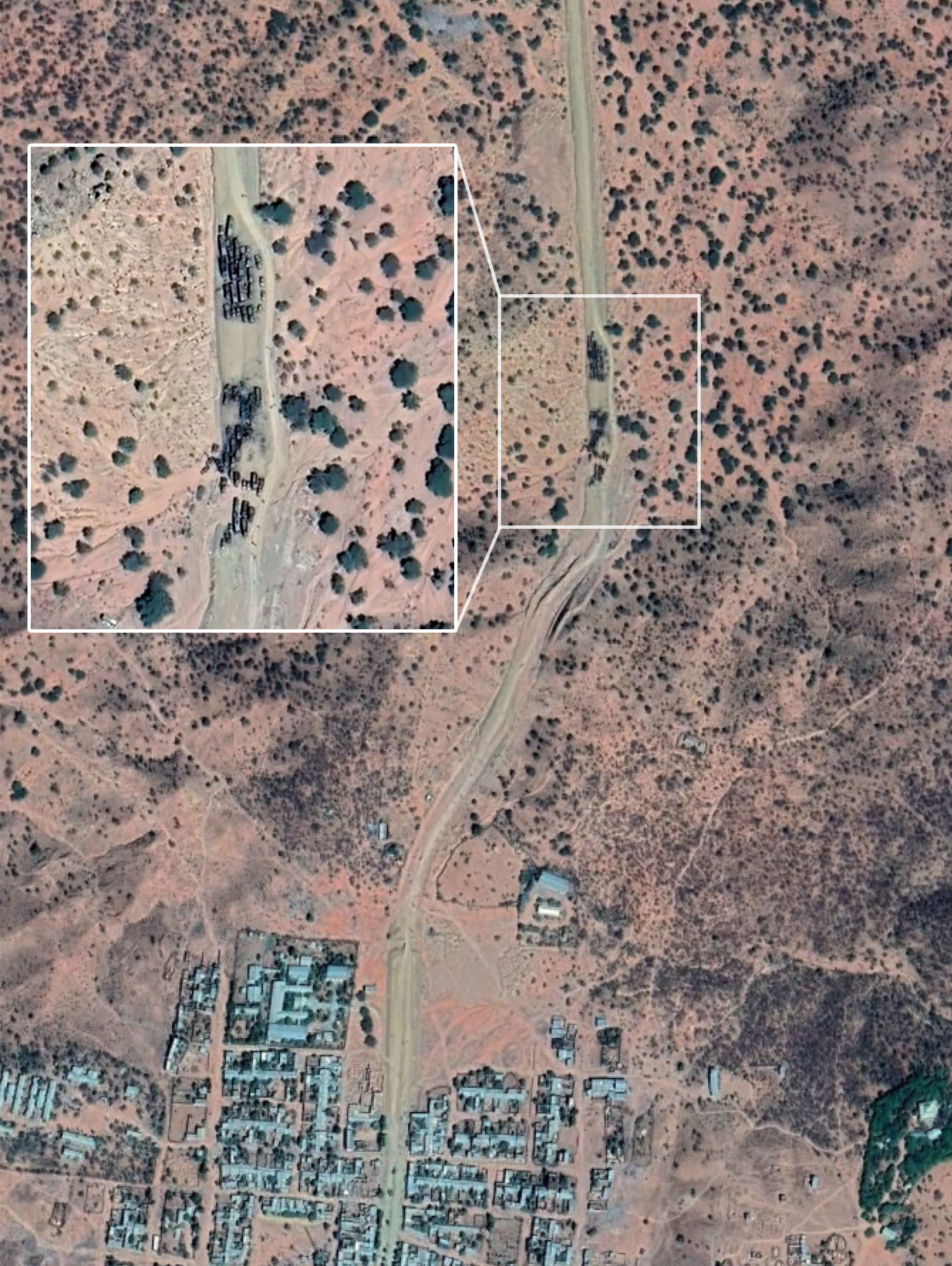
Earth satellite imagery taken on
23 February 2022 show a
collection of vehicles that have
been regrouped and moved just
off the main road 900 metres
north of the entrance to Yech’illa
town
One year on since MSF published its internal review into the brutal killing, the families of María, Tedros, and Yohannes have still not received any official communication or substantiated findings regarding what happened that day, and we urge the Government of Ethiopia to fulfil its obligation in finishing and releasing the investigation.
The findings of an MSF review published one year ago confirmed that the attack was an intentional and targeted killing of three clearly identified aid workers. They also established that a convoy of Ethiopian National Defence Forces (ENDF) was present at the time of the incident, on the same road where our colleagues were killed.
May 2026 marked 10 years since the United Nations Security Council unanimously adopted Resolution 2286, in which states committed to uphold their obligations under International Humanitarian Law and protect medical humanitarian personnel. However, the Tigray incident is emblematic of a global failure to fulfil this commitment, as states neglect their duty to investigate and hold accountable those responsible for attacks on humanitarians and medical staff.
Maria, Tedros, and Yohannes lost their lives while providing lifesaving assistance to people in crisis. Their murder must not be forgotten, nor met with silence, just as attacks should not be normalised and enabled by impunity. States need to maintain their commitment to building a safer environment for humanitarians through concrete actions and not just empty words.
MSF urges the United Nations Security Council, and all states, to take stronger action on ensuring incident accountability and the safety of humanitarian personnel. We call upon all states to uphold their responsibility to respect – and ensure respect for – international humanitarian law, including the protection of aid workers.